

Cyano Bloom Watch
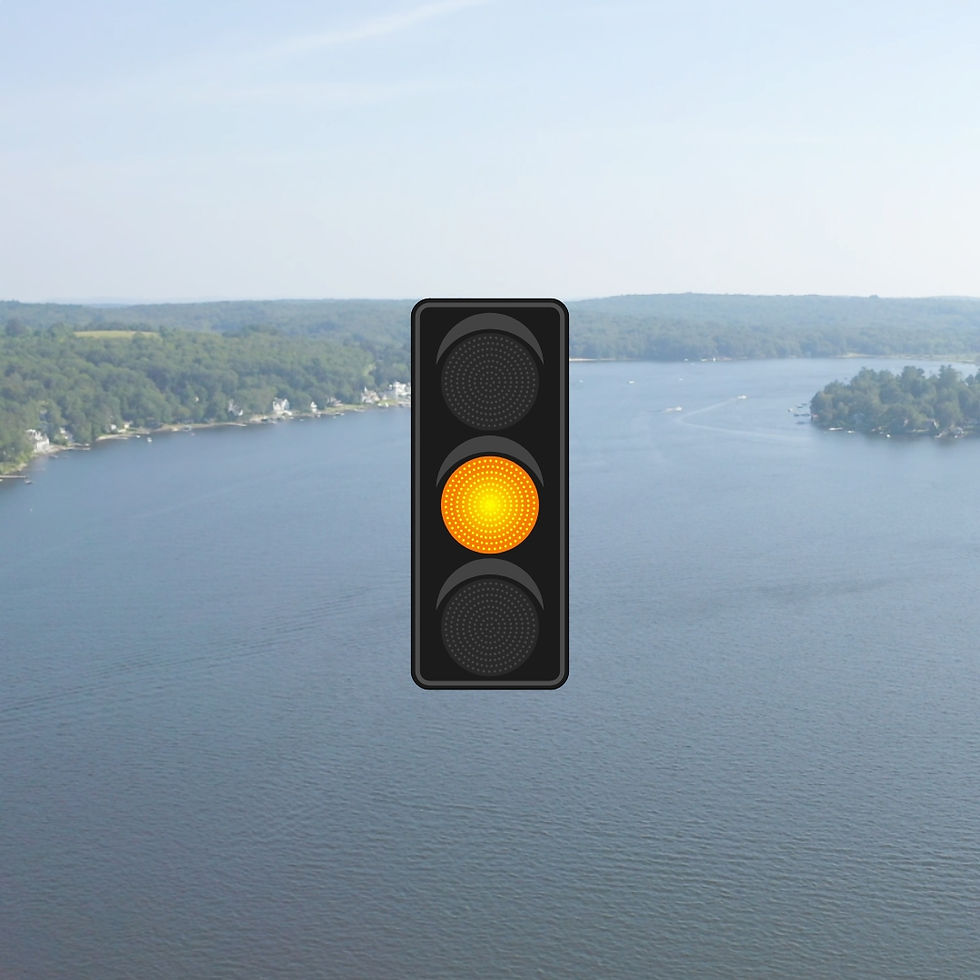
Updated Sept. 29, 2026
Samples collected April - October
Based on cyanobacteria cell concentrations in samples collected from the lake on September 29, 2026, and other related water quality data, the risk to the public from cyanobacteria / harmful algal blooms was MODERATE.
Cyanobacteria cell concentrations at two of the three sites sampled, and the lake averages were consistent with the State’s Visual Rank Category 2
conditions, i.e., moderate public health risk. Other surrogate measures of cyanobacteria productivity indicate increased growth over the last several weeks.
Cyanobacteria Bloom FAQs
What do the stoplight colors mean?
BLPA consultants use visual clarity and cyanbacteria cell concentrations in water samples to determine whether the stoplight is green, yellow or red.
-
Green: the risk of harmful cyanobacteria blooms is low.
-
Yellow: the risk of harmful cyanobacteria blooms is low to moderate--the public should exercise caution and avoid contact with water that is visibly discolored.
-
Red: the risk of harmful cyanobacteria blooms is moderate to high. The public—especially young children and pets—should avoid all contact with the water.
What is Cyanobacteria?
Cyanobacteria (aka blue-green algae) is naturally occurring in lakes and ponds throughout CT and in ordinary circumstances cause no apparent harm.
However, with warming temperatures and increased phosphorus loading associated with human pollution, these microscopic organisms reproduce rapidly, resulting in a bloom – where the algal biomass increases to the extent that normally clear water becomes discolored (green or reddish brown) thick, mat-like, and “soupy.”
What are Harmful Algae Blooms (HABs)?
Not all cyanobacteria blooms release cyanotoxins into the water, but when they do the bloom is categorized as a harmful algal bloom, or HAB.
There are several types of possible toxins released by HABs, but the most common type in freshwater is called microcystin.
What makes HABs harmful?
Though data is limited on the effects of cyanotoxin exposure to humans, cyanotoxins are associated with liver damage, skin irritation, GI symptoms, & neurotoxicity.
Microcystin is primarily a hepatotoxin (meaning it damages the liver).
Important to note: Based on US EPA’s recreational criterion, CT DPH recommends a toxin threshold of 8 µg/L microcystin (US EPA, 2019). Since the inception of the Microcystin Toxin Testing Program at WCSU in ~2015, we’ve have never seen microcystin levels greater than 2 µg/L in Bantam Lake.
How risky is it to use the lake when there is an active bloom?
When in doubt, stay out! Young children and pets consume more water relative to their body weight when compared to adults and older children. This puts kids and pets at an increased risk of adverse health impacts of cyanotoxins at lower levels. If a waterbody is suspected to be experiencing a cyanobacteria bloom, it is best to eliminate all contact with the water.
Your risk of exposure to cyanotoxins depends on how you use the lake.
High Level of Potential Exposure:
-
Swimming/wading (ingestion)
-
Diving (ingestion)
-
Water skiing/wakeboarding/tubing (Ingestion/inhalation)
-
Wind surfing (ingestion/inhalation)
-
Jet skiing (ingestion/inhalation)
Moderate Level of Potential Exposure
-
Fish consumption* (ingestion)
-
Canoeing (inhalation/skin)
-
Rowing (inhalation/skin)
-
Sailing (inhalation/skin)
-
Kayaking (inhalation/skin)
-
Motor boating (inhalation)
Low Level of Potential Exposure
-
Catch & release fishing (skin)
*Fish living in waters affected by a blue-green algae bloom may accumulate algal toxins in their muscle tissue and internal organs. However, the health risk posed by consumption of such fish is uncertain. Toxin levels are usually higher in internal organs than in the muscle tissue. General precautionary advice to anglers to reduce exposure includes:
-
Avoid fishing in areas with visible algae blooms due to potential incidental contact with the water.
-
Eat fish from water bodies with blue-green algae blooms in moderation (1-2 meals per week).
-
Remove skin and internal organs before cooking. Wash fillets before cooking or freezing.
What does BLPA test for regarding Cyanobacteria?
Every two weeks from May through October, BLPA consultants take samples from 3 different spots on the lake (Center Lake, Point Folly & South Bay) and look at:
1. Which species of algae are present in the samples.
2. The cell concentrations of cyanobacteria:
-
0 – 20,000 cells/mL = lowest risk of toxic algae blooms
-
20,000 – 100,000 cells/mL = moderate risk of toxic algae blooms
-
>100,000 cells/mL = highest risk of toxic algae blooms
3. The Visual Rank Category Classification, based on water clarity:
-
Category 1: Visible material is not likely cyanobacteria or water is generally clear.
-
Category 2: Cyanobacteria are present in low numbers. There are visible small accumulations but water is generally clear.
-
Category 3: Cyanobacteria are present in high numbers. Scums may or may not be present. Water is discolored throughout. Large areas affected. Color assissts to rule out residiment and other algae.
4. Microcystin toxin levels (*testing for microcystin only available Memorial - Labor Day)
What are the treatment options for Cyanobacteria?
-
Algicide
-
Fast, visual relief
-
Treats the symptom, not the cause (phosphorus)
-
Very temporary
-
Decompostion can cause oxygen depletion and nutrient release due to vegetation decay
-
Cost = Low
-
-
Dredging
-
Physically deepens lake, improving water volume and reducing shallow weed growth
-
Permanently eliminates internal phosphorus load buried in sediment
-
Heavy equipment can disrupt shoreline ecosystems
-
Disposal Issues: Muck must be dried and properly disposed of (limited places to dispose of)
-
Can temporarily suspend sediments, releasing nutrients and reducing water clarity
-
Cost = Very High
-
-
Alum
-
Long-lasting, can provide 10-20 years of phosphorus control when external sources are managed
-
Traps phosphorus without harming native plants & fish
-
Need to carefully manage pH levels of treatment; can be toxic if not done properly
-
Watershed dependent: Does not stop new phosphorus from entering lake. Watershed management is required!
-
Cost = Very High
-